2026-11-28 ·
Can You Fix a Garage Door Off Its Track Yourself? A Safe DIY Checklist
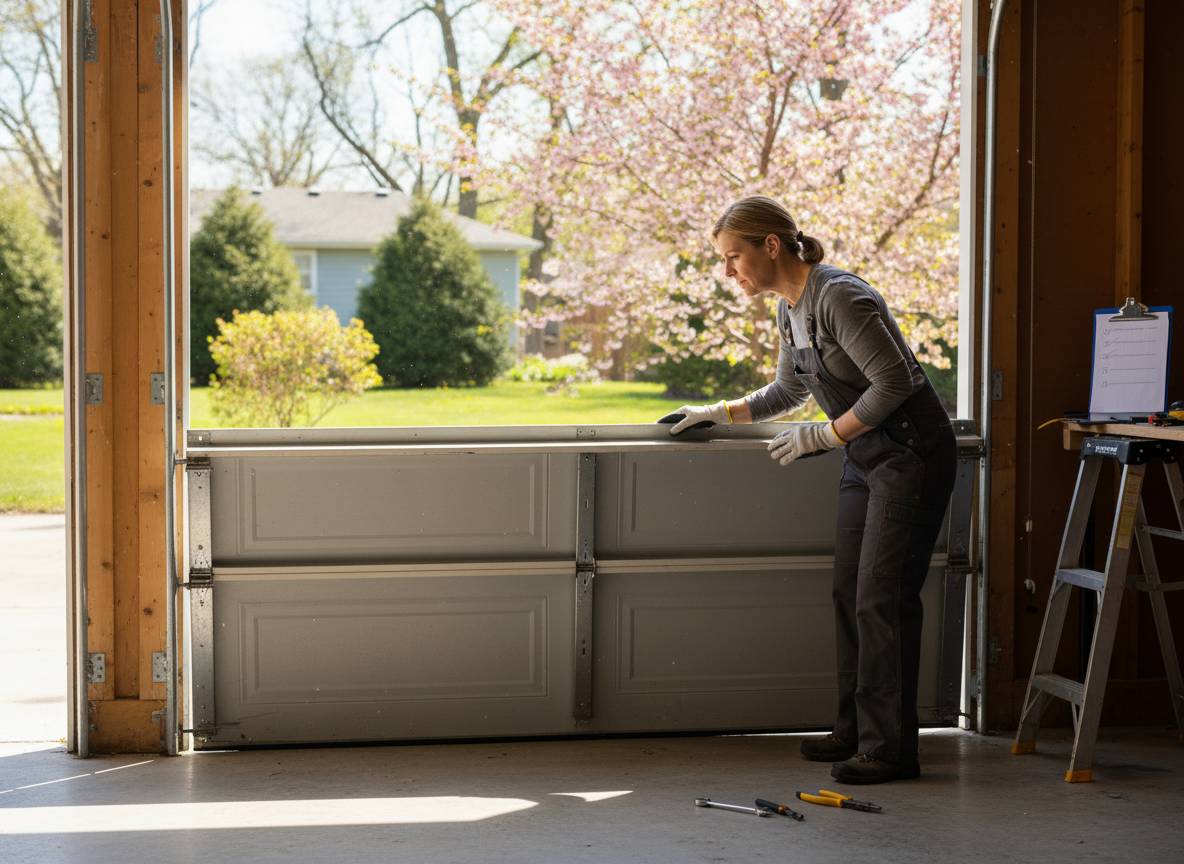
Yes, in limited cases. A garage door that has popped one or both rollers out of its bottom track can often be guided back by a homeowner with basic hand tools, provided the springs, cables and drums are intact and the door still sits reasonably level. The real danger is that the springs carry heavy tension even when the door looks harmless, so the job is really about controlling the door and knowing when to stop. If the door is off track and there is no clear, simple cause, treat it as a repair for a technician rather than a weekend project. The checklist below covers what a safe attempt looks like and where to draw the line.
Know Where the Line Falls
A track problem is a reasonable DIY job only when the hardware around it is undamaged. Most off-track doors happen because a roller has jumped out, the door was bumped, or a section was pushed out of alignment by an obstruction. Those situations usually leave the springs, lift cables and drums in working order. Several conditions, however, mean the door should stay closed and the work should wait for a trained technician:
- A spring is visibly broken, gapped or has come loose from its bracket
- A lift cable is frayed, slack on one side or hanging off a drum
- The door is bent, cracked or has a section buckled out of its panels
- The door is sagging, jammed halfway open or dropping unevenly
- You see rust or debris packed into the track that you cannot clear easily
If any of these apply, the door is no longer just off its track. It is a loaded system that can move suddenly, and forcing it back into position can cause more damage or injury.
A Safe DIY Checklist Before You Touch the Door
Start by making the area safe, because most injuries happen when people rush. Clear the space under the door, keep children and pets inside, and make sure nothing is parked where the door could drop. Next, close the door fully if you can do so by hand without forcing it. Use the emergency release cord on the opener, usually a red handle hanging from the rail, to disconnect the door from the opener trolley. Pull the cord only while the door is closed, and keep your hands clear of the track as it moves.
Once the opener is disconnected, follow this order:
- Confirm the door is closed and the opener is disconnected before anything else.
- Look at the springs, cables and drums from a safe distance and stop if anything looks broken or loose.
- Place a sturdy C-clamp or locking pliers on the track just below the affected roller to hold the door in place.
- Check that the door is not tilted to one side and that no section is bent or cracked.
- Remove visible debris, dirt or old lubricant from the track before attempting any movement.
- Work with a helper, and never stand directly beneath the door while adjusting it.
Do not attempt to adjust, wind or touch the springs at any point. Those components store enough force to cause serious harm, and they are not part of a homeowner track fix.
Realigning Rollers Without Forcing the Door
With the door clamped and secured, examine the roller that came out of the track. Often the roller sits on the edge of the track or against the flange, and it can be guided back in using a rubber mallet or a block of wood. Tap gently on the track rather than the roller, and push the roller toward the groove slowly. If the roller is bent or the wheel is cracked, replace it before continuing, because a damaged roller will jump again quickly.
When both sides are back in the track, check that the gaps look even and that the door moves freely by hand when you release the clamp. Lift the door slowly to see whether the rollers ride straight in the track, and stop immediately if one side binds or the door tilts. A track that is slightly bent can often be tapped back into shape, but only if the bend is minor and the track is still firmly mounted. If you find the track loose from the wall or ceiling, leave it alone and reconnect the opener only after a repair.
What Usually Causes a Door to Jump the Track
Doors rarely leave their tracks for no reason. The most common triggers are a sudden bump from a vehicle, a heavy gust catching an unbalanced door, or a roller wearing down until its wheel no longer tracks smoothly. Dirt, grit and dried lubricant also build up in the track over time, slowing the rollers until one catches and jumps. Gulf Coast humidity adds to the problem, since moisture can swell wooden sections, corrode hinges and stiffen old lubricant. Our piece on why your garage door struggles during spring Texas heat and humidity explains how those seasonal changes affect moving parts. Cleaning the track and checking the rollers once or twice a year is usually enough to prevent a repeat.
When to Stop and Call for Help
A door that came off once because of a bump may be safe to reset yourself, but a door that keeps jumping, grinds, sags or leaves you unable to clear the track should be inspected professionally. Repeated derailment usually points to worn rollers, a misaligned track, a damaged hinge or a spring that is no longer balancing the door. A technician can test the balance and identify the source instead of guessing. If the springs or cables are damaged, the job belongs to a trained crew, and our garage door repair services cover track, roller, spring and cable work. If the door is working but the opener will not reconnect or reverse properly after you reset the track, our garage door opener repair page describes what to check next. When in doubt, keep the door closed, keep the opener disconnected, and let a professional take it from there.