2026-11-28 ·
Signs Your Garage Door Springs Are Wearing Out in Spring, TX
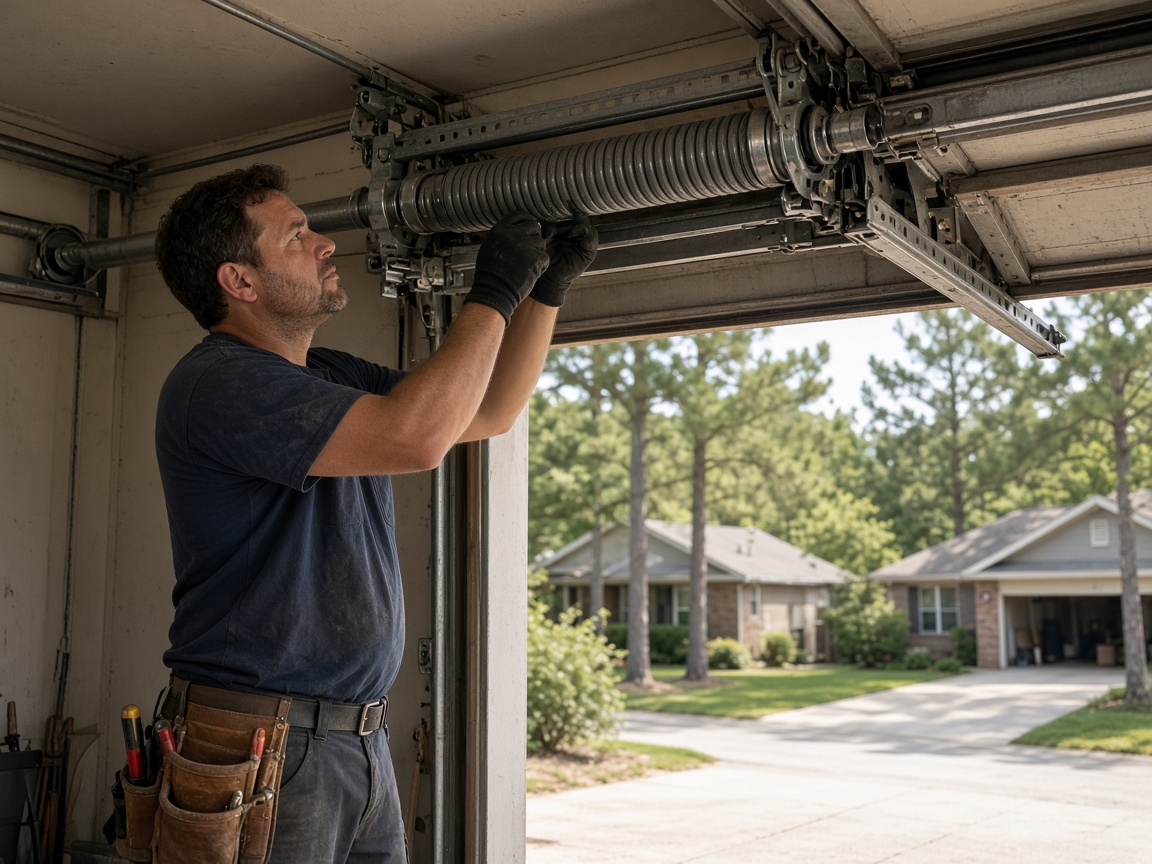
A garage door spring rarely fails without warning. In Spring, TX, the long stretches of Gulf Coast heat and humidity wear on the steel, and the springs give off signs long before they break. Here are the signs to look for in your garage, and what an inspection covers.
A Visible Gap in the Coil
A torsion spring sits on a shaft above the door, and its coils should sit tightly together. When a spring weakens, a gap opens between the coils, or the coils look stretched apart along the shaft. An extension spring runs along the horizontal track, and the same kind of separation shows there. A visible gap is one of the clearest signs that a spring has lost tension and is close to failing.
Rust and Corrosion
Spring's humidity works on bare steel. Rust shows up as orange or brown patches on the coils, on the cable drums, and where the spring meets its mounts. Corrosion thins the metal and creates rough spots that catch and grind as the door moves. A spring with heavy rust is weaker than it looks, and it can snap without the door showing any other symptom first.
A Door That Feels Heavy or Lifts Unevenly
A balanced door should lift with steady effort and stay put when you leave it halfway open. If the door feels much heavier than it used to, or one side rises faster than the other, a spring has lost tension. An uneven lift puts extra strain on the opener, the cables, and the rollers, and it wears the track hardware out of square over time.
A Loud Bang from the Garage
A sharp bang from the garage is the sound most Spring homeowners notice first. It usually means a spring has snapped, and the door drops onto the opener and the cables in one sudden movement. After a bang, the door may sit crooked, hang partway open, or refuse to move at all. Do not try to force it open or closed, since the remaining spring and the cables are still under tension.
The Opener Straining
When a spring weakens, the opener has to do the lifting the spring used to do. The motor sounds louder, the door moves slowly or hesitates, and the opener may reverse partway down because the force settings trip. An opener that strains is often the first sign that a spring is failing, and it is also the part most likely to wear out next if the spring is left as it is.
A Sagging or Crooked Door
A door that sags to one side, sits crooked in the opening, or leaves a gap along the top or the bottom is often hanging on one working spring. The cables on the weak side go slack, the rollers bind in the track, and the door drifts out of square a little more each time it moves. A sagging door is harder to close and harder to seal, and it lets in the humidity that wears the rest of the hardware.
Why Worn Springs Should Not Be Ignored
A worn spring does not get better on its own. Each cycle stretches the metal further, the rust spreads, and the remaining tension drops. A spring that fails while the door is moving can drop the door suddenly, damage the opener, and bend the tracks and the header. Catching wear early keeps the repair to the springs themselves, instead of the springs and everything they pulled down with them.
What an Inspection Covers
An inspection looks at the whole system, not just the spring that looks worn. We check both springs for gaps, rust, and lost tension, look at the cables and drums for fraying, test the door balance by hand, and check the opener, the safety sensors, and the travel limits. We write down what we find in plain language and explain the scope in writing before any work begins, so you know exactly what will be done and why. If you notice any of the signs above, have the door inspected before the spring fails. Our garage door repair team covers Spring and the surrounding neighborhoods.